

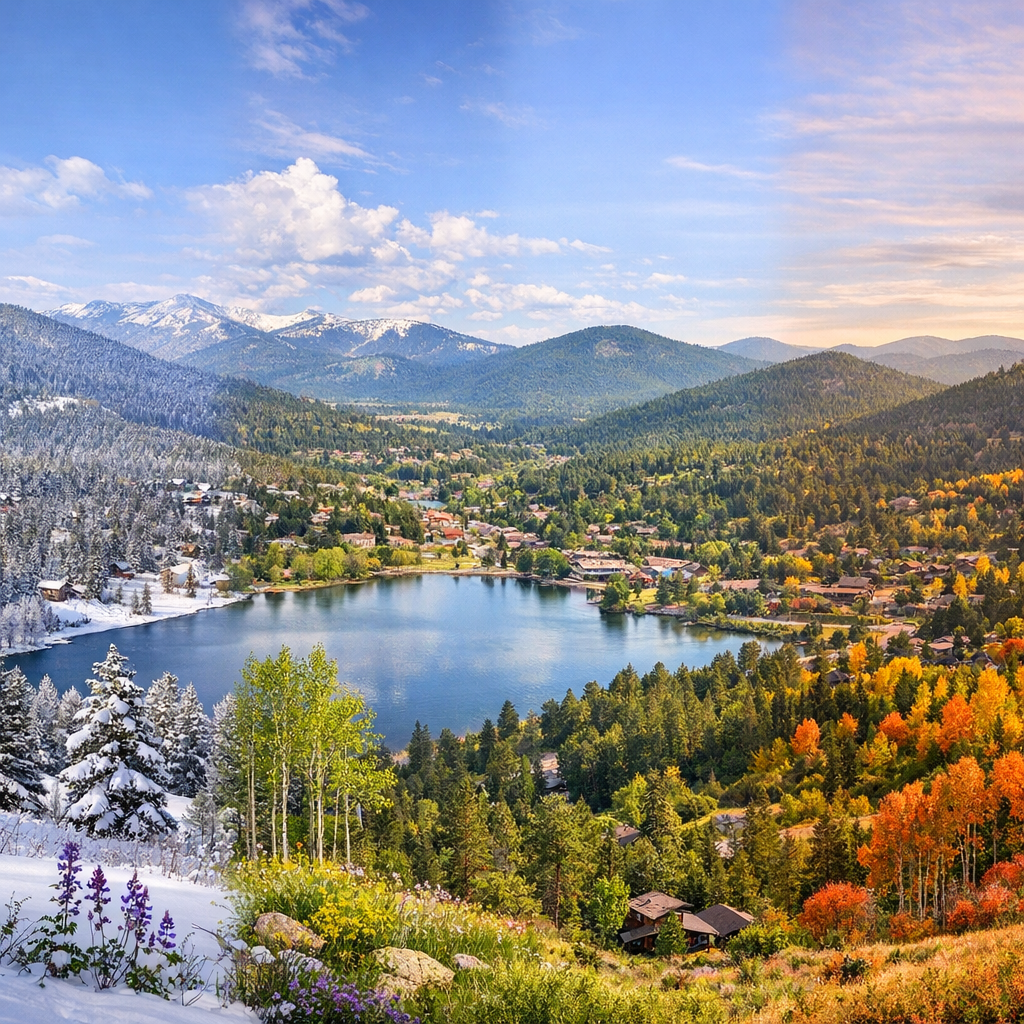
Evergreen, Colorado, nestled in the foothills of the Rocky Mountains, experiences a diverse climate characterized by distinct seasonal variations. Understanding these patterns is essential for residents and visitors alike.
Winter: Snowy and Cold
Winters in Evergreen are typically cold and snowy. Average high temperatures in December hover around 36.5°F (2.5°C), with lows dipping to approximately 18.3°F (-7.6°C). Snowfall is significant, averaging 103 inches annually, providing ample opportunities for winter sports enthusiasts.
Spring: Transition and Renewal
Spring brings a gradual warming trend. March sees average highs of 45°F (7°C), increasing to 60°F (16°C) by May. This season also marks increased precipitation, with May receiving the highest average rainfall of 2.99 inches (76mm).
Summer: Warm and Pleasant
Summers are warm, with July being the hottest month, averaging highs of 79°F (27.2°C) and lows around 55°F (13.5°C). The area enjoys approximately 248 sunny days per year, making it ideal for outdoor activities.
Fall: Cool and Crisp
Autumn sees a gradual cooling, with September averaging highs of 70°F (21°C) and lows of 45°F (7°C). The changing foliage offers picturesque landscapes, attracting many to the area.
Environmental Considerations
Evergreen’s climate contributes to its natural beauty but also presents environmental challenges. The area ranks high nationally for wildfire risk due to dense forests and dry conditions. Additionally, the community faces issues like elevated alkalinity in wastewater, impacting treatment processes.
Understanding Evergreen’s climate is crucial for preparedness and appreciation of the region’s natural environment. Staying informed helps residents and visitors make the most of what each season offers.