

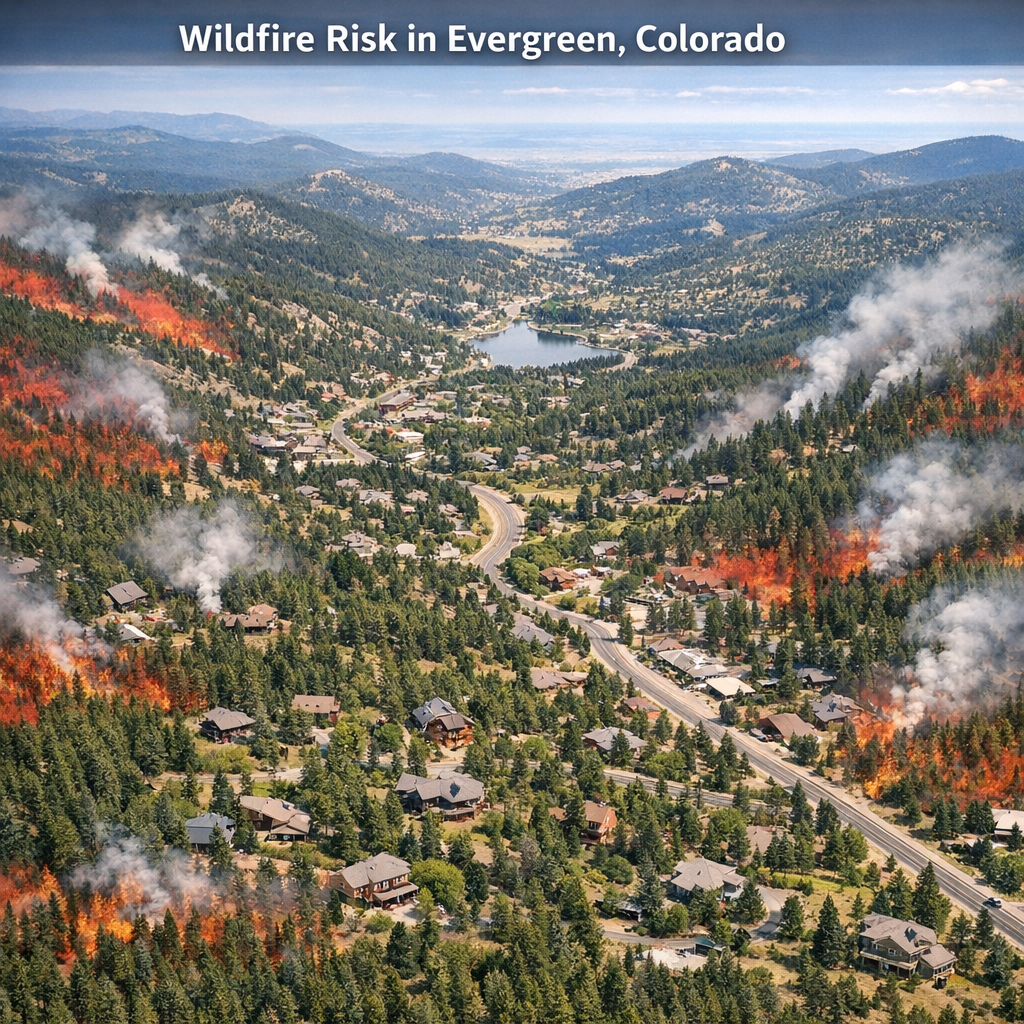
As residents of Evergreen, Colorado, we cherish our picturesque mountain town nestled in the foothills of the Rockies. However, the escalating threat of wildfires poses a significant challenge to our community. Understanding the global factors contributing to this risk is essential for developing effective local strategies.
Climate Change: A Global Driver of Local Wildfire Risk
Climate change is a primary factor in the increasing frequency and intensity of wildfires worldwide. Rising global temperatures lead to prolonged droughts, reduced snowpack, and extended fire seasons. These conditions create an environment where wildfires can ignite more easily and spread rapidly.
In Evergreen, these global trends manifest as drier forests and more frequent red flag warnings. The combination of higher temperatures and decreased precipitation has led to vegetation drying out, making our forests more susceptible to ignition. Additionally, the decline in snowpack reduces the moisture available to trees, further stressing our local ecosystems.
Local Impacts: Evergreen’s Escalating Wildfire Risk
Our community faces a 98% higher wildfire risk than most counties across the United States. This alarming statistic is due to several factors:
- Dense Forests: Our beautiful, thickly wooded areas provide ample fuel for potential fires.
- Beetle-Kill Trees: Infestations have left many trees dead and dry, increasing flammability.
- Expanding Development: As more homes are built in fire-prone areas, the potential for human-caused ignitions rises.
These local conditions, combined with global climate trends, have led to longer and more intense fire seasons in Evergreen.
Community Response: Mitigation and Preparedness
Addressing this growing threat requires a concerted effort from all community members. Here are some steps we can take:
- Fire-Resistant Landscaping: Choosing plants and materials that are less likely to ignite can help protect homes.
- Creating Defensible Space: Clearing vegetation and other flammable materials from around structures reduces fire risk.
- Emergency Preparedness: Developing and practicing evacuation plans ensures readiness in case of a wildfire.
Local authorities are also investing in wildfire prevention and response. Jefferson County has allocated nearly $7 million toward these efforts, including homeowner support programs and resources for creating defensible spaces.
Conclusion
While global climate change presents significant challenges, our community’s proactive approach can mitigate the risks. By understanding the connection between global events and local impacts, we can work together to protect Evergreen’s natural beauty and ensure the safety of our residents.