

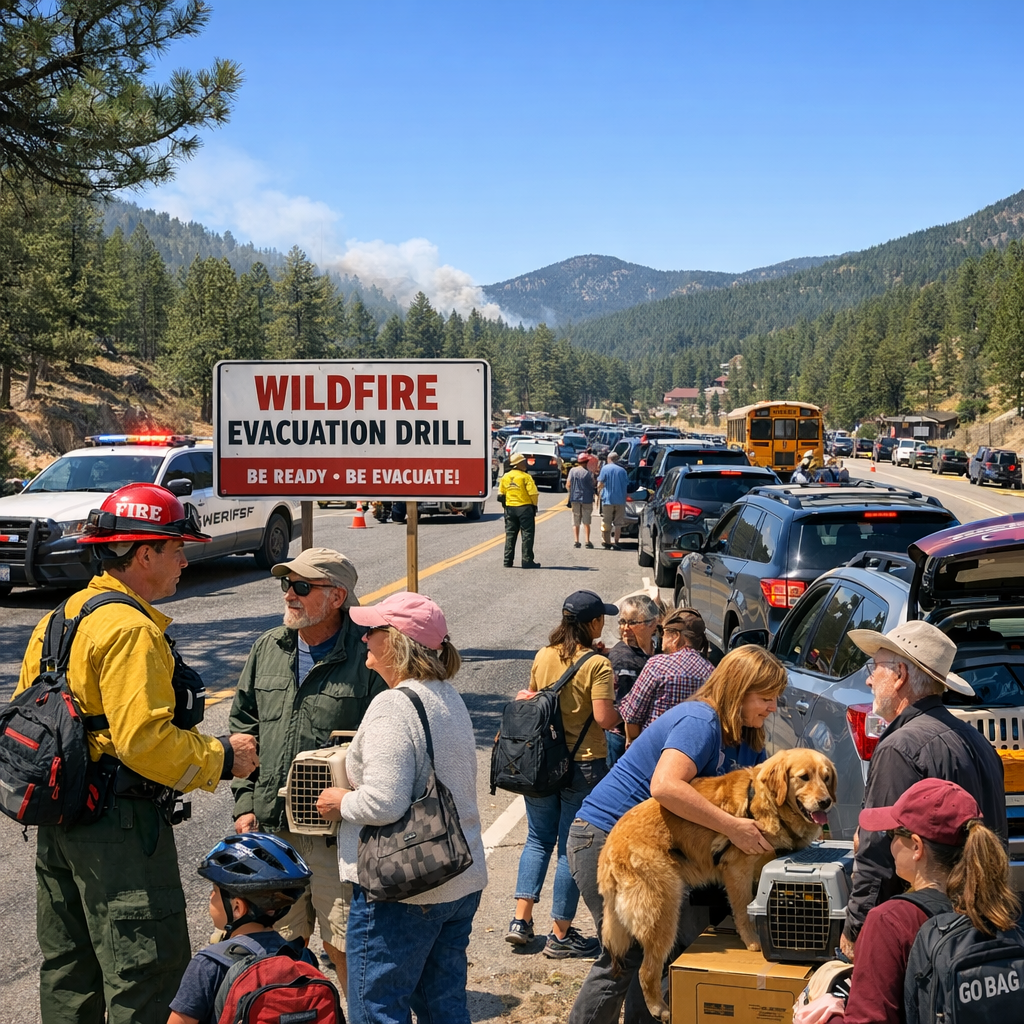
As global climate patterns shift, communities worldwide are facing new environmental challenges. In Evergreen, Colorado, these changes are manifesting as increased wildfire risks, prompting residents and local authorities to reassess their preparedness strategies.
Understanding the Global Climate Connection
Climate change has led to longer, more intense fire seasons globally. Rising temperatures and altered precipitation patterns result in drier conditions, making forests more susceptible to wildfires. In Evergreen, these global trends translate to local concerns, with the area experiencing heightened fire danger due to prolonged dry spells and reduced snowpack.
Local Impacts and Community Response
Evergreen’s dense forests and mountainous terrain, combined with expanding development in fire-prone areas, have elevated its wildfire risk. Recognizing this, over 1,000 residents recently participated in evacuation drills to better prepare for potential emergencies. Such proactive measures are crucial in mitigating the impact of wildfires on the community.
Steps Toward Resilience
To adapt to these evolving challenges, Evergreen residents can take several steps:
- Stay Informed: Regularly monitor local fire danger ratings and weather forecasts.
- Prepare Homes: Create defensible spaces around properties by clearing flammable vegetation and using fire-resistant building materials.
- Develop Evacuation Plans: Establish and practice evacuation routes and communication plans with family members.
- Engage with Community Initiatives: Participate in local fire safety programs and support community efforts aimed at reducing wildfire risks.
By understanding the link between global climate trends and local wildfire risks, and by taking proactive measures, Evergreen can enhance its resilience and safeguard its residents and natural surroundings.